"Sparkle" and the Fictive Dream in Your Name

Introduction
While there are many anime films that use music in powerful ways, Your Name stands out as one of the most notable ones. Directed by Makoto Shinkai and released in 2016, the film blends romance, science fiction, and drama to tell a story about two teenagers connected across time. I will be focusing specifically on the song “Sparkle” by RADWIMPS.
Background
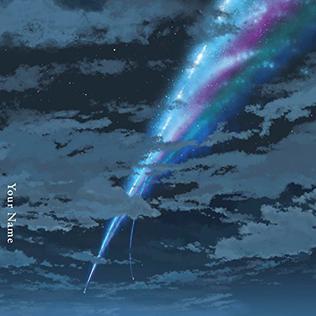
Name: Sparkle
Anime: Your Name
Composer/Artist: RADWIMPS
Release Year: 2016
Country of Origin: Japan
Your Name is a Japanese animated film released in 2016 that became widely known for its emotional storytelling and unique use of music. The soundtrack for the film was released as the album Your Name in 2016 and was composed, arranged, and produced entirely by RADWIMPS. The album includes multiple songs used throughout the film, including “Sparkle,” “Zenzenzense,” and other major tracks that are directly connected to key emotional and narrative moments.
RADWIMPS and director Makoto Shinkai worked closely together during production, where the music was adjusted to match the evolving animation, and the animation was often adjusted to match the music. This created a process where both elements influenced each other throughout the film’s development. According to vocalist Yojiro Noda, “the songwriting process was moving forward at the same time with the animation so it influenced each other. The music changed the story, the lines, and if the new scene was created, we changed the music. It was a creative process.”
This makes the soundtrack different compared to many films, because it is not just background music. Instead, the music is built into the storytelling process itself, meaning it directly shapes pacing, emotion, and narrative structure. “Sparkle” is one of the clearest examples of this, since it plays during the climax and is closely tied to the emotional parts of the story.
Story
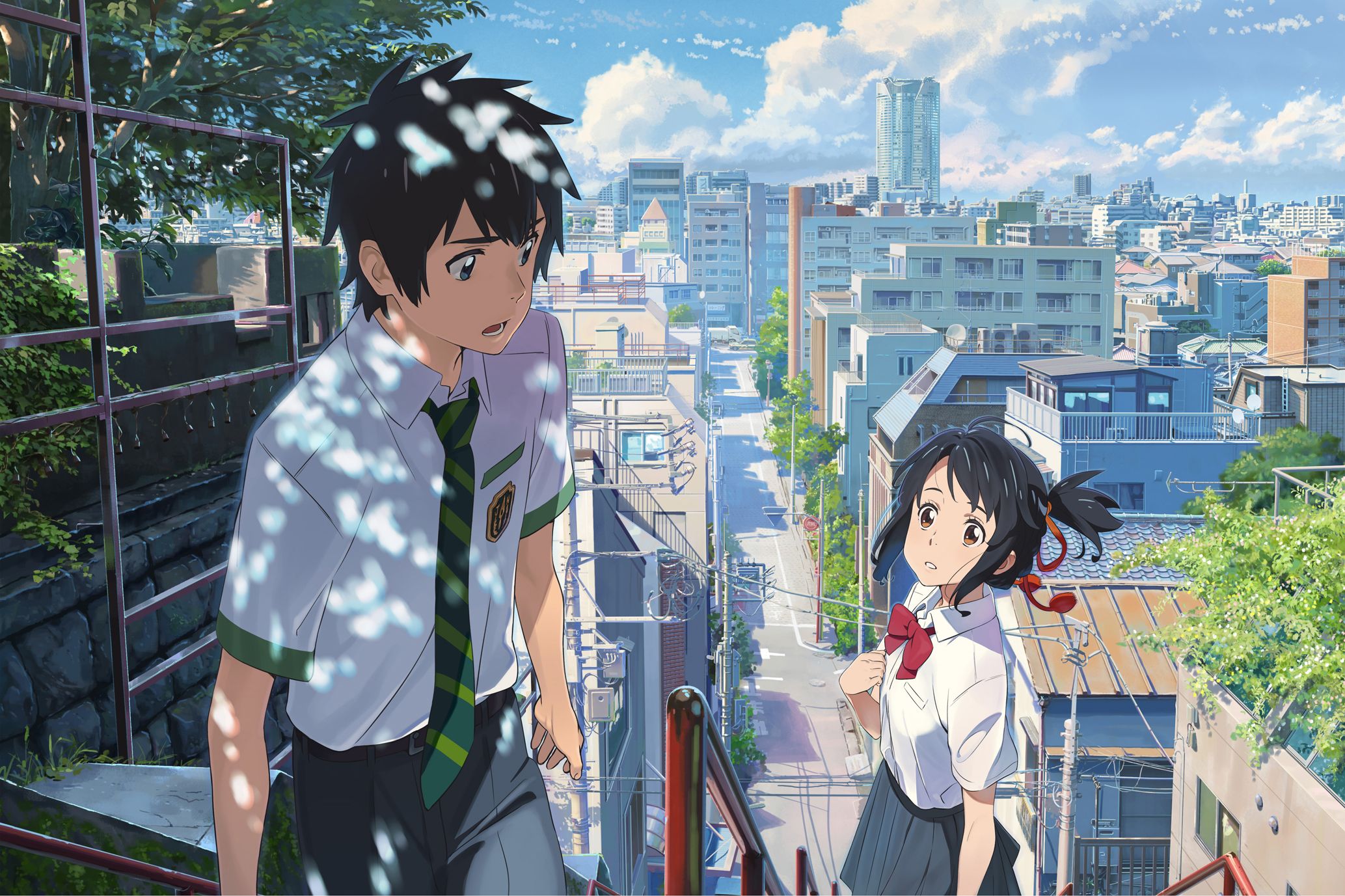
Your Name follows two high school students, Mitsuha Miyamizu and Taki Tachibana, who start switching bodies even though they live in different places. At first, they communicate through notes and messages while trying to figure out what is happening, and they slowly build a connection without ever meeting in person.
When the body-switching suddenly stops, Taki decides to look for Mitsuha. He travels with his friends to the Hida region, but when he gets there, he finds out that Itomori doesn’t exist anymore and was destroyed by a comet three years earlier. This is when he realizes something is wrong.
After learning about the destruction of Itomori, Taki tries to understand what really happened and figures out that Mitsuha lives three years in the past compared to his timeline. This becomes the main conflict of the story, since they are separated not just by distance, but by time.
Instead of stopping the comet, Taki and Mitsuha work together across time to save the people of Itomori by planning an evacuation before the impact. Mitsuha also convinces her father, the mayor, to order the evacuation at the last second. The town still gets destroyed, but many people survive because of what they do.
By the end of the movie, Taki and Mitsuha forget each other because their connection is tied to a Shinto concept of time and connection called musubi. Once they successfully change the timeline and save Itomori, that connection disappears, almost like waking up from a dream. The body-switching and memories are never fully permanent, so when everything is resolved, the memories start to fade.
Even though they forget each other’s names and faces, Taki and Mitsuha still feel like something important is missing. Years after the disaster, they pass each other on trains, recognize each other, and finally meet on a set of stairs in Tokyo.
"Sparkle" in the Movie
English Version of Sparkle
Role of the Song in the Story
“Sparkle” by RADWIMPS plays during the climax of Your Name, when Taki and Mitsuha are trying to save the people of Itomori. The song is important because it matches the emotional peak of the story instead of just acting as background music.
Instead of just watching characters try to outrun time, the music makes it feel like time is actually speeding up. It helps show how urgent everything feels, since the characters are running out of time.
Even though Taki and Mitsuha are separated by time, the music connects their emotions and makes their efforts feel linked. It also helps show the idea that their bond is still strong, even if they can’t fully remember each other anymore.
As a result, the audience experiences the climax less like a series of events and more like a single emotional build-up. The music turns the scene into something that feels both suspended in time and still moving forward, which matches the story’s focus on memory, fate, and connection.
Musical Analysis
"Sparkle" uses piano and strings with a moderate tempo to create a more reflective atmosphere. It is more cinematic and gentle, focusing on emotion rather than energy.
One of the most important parts of “Sparkle” is how the music builds over time. It starts calm and slowly becomes louder and more intense. This matches the story, because the characters are starting to realize how serious the situation is. The song is in the key of B major, which gives it a bittersweet sound.
The tempo stays around 123 BPM and doesn’t slow down, which reflects how the characters cannot stop what is happening no matter how much they want to. The instruments gradually layer on top of each other, creating a fuller sound as the song continues. This build-up reflects the growing tension in the movie’s climax. As more instruments are added, the sound becomes fuller, which makes the scene feel more intense and alive.
A key musical feature is gradual dynamic growth or crescendo. The texture also changes over time, starting simple and becoming more layered. This shows the shift from calm moments to emotional and dramatic moments in the story. The vocals stay emotional but controlled, which keeps the focus on feeling rather than chaos.
In the English version of “Sparkle,” around 1:36 the pre-chorus starts and the guitar becomes more active. The sound opens up and starts to feel more hopeful, leading into the chorus. It feels like the song is pushing forward instead of holding back. A similar build happens again around 3:39, where it rises into another chorus. This creates a wave-like structure where the song keeps rising and resetting instead of staying at one level.
From about 4:27 to 5:02, the song moves into a reflective section. The sound becomes more open and spaced out, like the intensity drops for a moment and the focus shifts outward. It gives a short break before everything builds again.
Then from 5:02 to 5:22, the music builds again and layers back in until it reaches a strong peak at 5:22. This feels like everything coming together in a full circle after being held back earlier in the song.
Social Commentary

The song “Sparkle” from Your Name can be seen as more than just a love song. It reflects the idea that even if the mind forgets, the heart will always remember. It also emphasizes the fragility of time and human relationships. This reflects a broader idea in society that people often try to hold onto memories, relationships, or experiences even though they cannot last forever especially where change is constant.
For example, the line “Even the second, hour hands of the clock / They look at us sideways as they tick and tock” shows that time is always present and cannot be ignored. It feels like time is almost working against the characters, and in the bigger picture, people in this world, reminding them that moments will not last, where people try to preserve relationships through photos and memories.
The lyrics “Since one day you will disappear / I’ll keep every part of you” also show the idea of trying to hold onto someone even when loss is expected. This connects to the movie because even though Taki and Mitsuha forget each other, they still feel like something important is missing. In this way, the song resonates beyond the film by expressing a shared emotional idea that many audiences can relate to.
Another important idea is in “Words like ‘tomorrow’ or ‘future’ or ‘fate’ / No matter how far they extend their hands”. This suggests that things like fate and time feel inevitable, but love and connection still exist inside them.
In the movie, this connects to how the characters are separated by time, but still manage to reach each other emotionally and eventually in real life. Even when memory fades, the emotional connection is still there, which is the central idea of the movie. People often worry about losing relationships because of distance, change, or the passage of time. However, “Sparkle” suggests that emotional bonds are not defined only by their duration, but by their impact. Even if people drift apart or forget certain details of each other, the feelings created in those moments can still remain and shape who they become in the future.
Personal Connection and Opinion
I’ve rewatched Your Name a lot, and every time I do, I still wish I could experience it again for the first time. Even though I already know what happens, the emotional impact doesn’t really go away, especially during the climax when “Sparkle” plays. The song feels very closely connected to that moment in the film, because of how it was made specifically to carry that part of the story.
Over time, I’ve also connected a lot with the lyrics, especially the way they match the emotions of the story instead of just describing it, and as I grew up, I could relate even more to it like graduating from high school or not seeing old friends again. To me, the song also has this almost visual quality, like it captures the feeling of looking at something like the Aurora Borealis. It has that same sense of something beautiful, overwhelming, and a little hard to fully hold onto. That matches the movie’s idea of moments slipping away, but emotion still staying behind.
Source
Barder, Ollie. “Radwimps on How They Scored the Music for the Anime Blockbuster Your Name.” Forbes, 18 Apr. 2017, https://www.forbes.com/sites/olliebarder/2017/04/18/radwimps-on-how-they-scored-the_music-for-the-anime-blockbuster-your-name/ .
“Your Name.” Wikipedia, Wikimedia Foundation, https://en.wikipedia.org/wiki/Your_Name .
“Your Name (Album).” Wikipedia, Wikimedia Foundation, https://en.wikipedia.org/wiki/Your_Name_(album) .

Comments
Post a Comment